
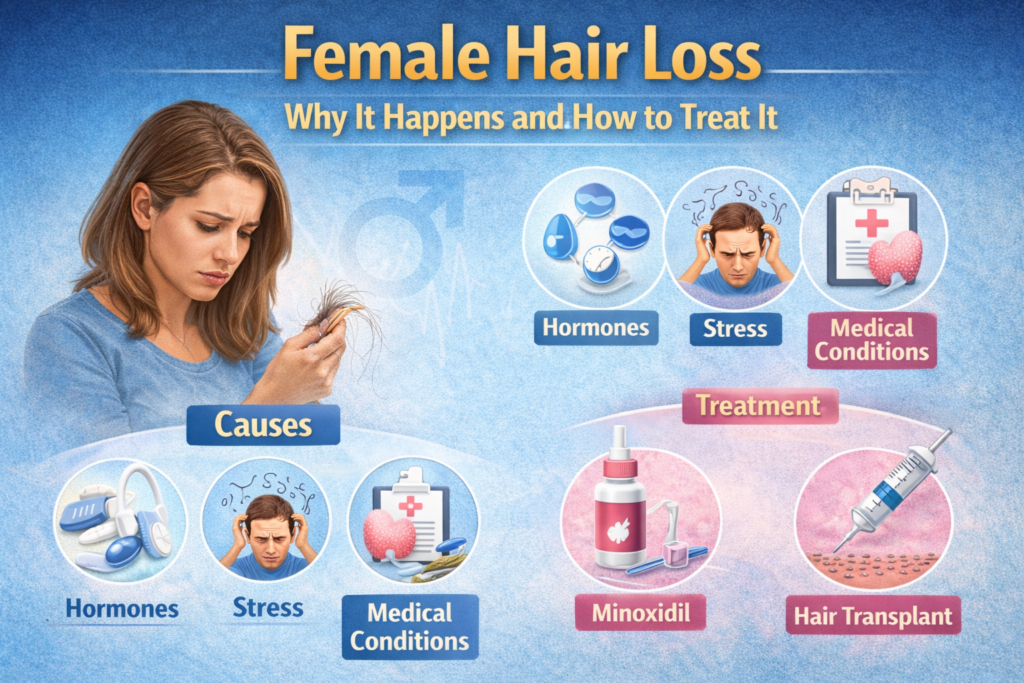
Hair loss is often viewed as a male issue, but female hair loss is more common than many realize. Millions of women experience noticeable hair thinning at some point in their lives. Unlike men, women rarely lose all their hair — instead, they typically notice gradual thinning, widening parts, or reduced hair volume.
Because hair is closely connected to identity and confidence, hair thinning in women can have a deep emotional impact. The good news is that modern medical advancements and telehealth solutions now provide effective and discreet options for women hair loss treatment. Platforms like AdamHealth.co make it easier to access professional care online, often with a first month free option for eligible patients.
Understanding why hair loss happens and how to treat it is the first step toward restoring both hair health and confidence.
Understanding Female Hair Loss
Female hair loss differs from male pattern baldness in both pattern and progression. The most common type is female pattern hair loss (FPHL), also known as androgenetic alopecia in women.
Instead of a receding hairline, women usually experience:
- Diffuse thinning across the scalp
- A widening part line
- Reduced hair density
- Decreased ponytail thickness
- Increased shedding during brushing or washing
In many cases, hair thinning develops gradually over months or years.
Common Causes of Hair Thinning in Women
Hair thinning in women can result from a variety of hormonal, medical, and lifestyle factors.
1. Hormonal Changes
Hormonal fluctuations are one of the leading causes of female hair loss. Changes may occur due to:
- Pregnancy and postpartum shifts
- Menopause
- Polycystic ovary syndrome (PCOS)
- Birth control adjustments
A decrease in estrogen or an increase in androgen sensitivity can affect hair growth cycles.
2. Genetics
Just like men, women can inherit a genetic predisposition to hair thinning. If close female relatives experienced thinning hair, the risk may be higher.
3. Stress and Illness
Physical or emotional stress can push hair follicles into a resting phase, leading to temporary shedding known as telogen effluvium.
4. Nutritional Deficiencies
Low iron levels, vitamin D deficiency, protein insufficiency, and other nutrient gaps can contribute to thinning hair.
5. Thyroid Disorders
Both hypothyroidism and hyperthyroidism can disrupt hair growth cycles.
Identifying the root cause is essential before starting any women hair loss treatment, as different conditions require different approaches.
Early Signs You Shouldn’t Ignore
Early detection improves treatment outcomes significantly. Many women overlook subtle changes until hair thinning becomes more noticeable.
Common early signs include:
- Increased hair on pillows or in the shower drain
- Noticeably thinner ponytails
- A widening hair part
- Scalp visibility under bright lighting
- Slower hair growth
Seeking professional guidance at the first signs of female hair loss increases the likelihood of preserving existing hair and stimulating regrowth.
Why Early Intervention Matters
Hair follicles shrink gradually. In early stages, they remain active and responsive to treatment. However, if left untreated for too long, follicles may become dormant.
Benefits of early treatment include:
- Slowing further hair thinning
- Preserving hair density
- Supporting regrowth
- Reducing emotional stress
- Improving long-term outcomes
The sooner women address hair thinning, the better the results tend to be.
Effective Women Hair Loss Treatment Options
Modern treatments target the underlying causes of hair loss and help support healthier hair growth.
1. Topical Minoxidil
Minoxidil is one of the most widely recommended treatments for female pattern hair loss. It works by improving blood flow to hair follicles and extending the hair growth phase.
Benefits include:
- Clinically studied for hair regrowth
- Easy daily application
- Supports thicker, fuller-looking hair
Consistency is key for visible results.
2. Prescription Medications
In certain cases, prescription treatments may be recommended depending on hormonal factors and individual health profiles. These treatments require medical evaluation to ensure safety and effectiveness.
3. Nutritional Support
Addressing iron deficiency, vitamin D levels, and protein intake can improve hair health. A balanced diet supports overall scalp condition.
4. Stress Management
Reducing stress through exercise, meditation, adequate sleep, and self-care can help stabilize hair growth cycles.
The Role of Online Hair Loss Treatment
Many women feel uncomfortable discussing hair thinning in person. Telehealth has transformed how women access professional support.
Through Adam Health, patients can explore online hair loss treatment that includes:
- A confidential medical assessment
- Review by licensed healthcare professionals
- Personalized treatment recommendations
- Prescription support when appropriate
- Discreet home delivery
This approach removes the need for in-clinic appointments while ensuring medical oversight. For eligible new patients, Adam Health may offer a first month free, allowing women to begin treatment with reduced financial commitment.
Convenience, privacy, and professional care make telehealth a strong option for managing female hair loss.
Managing Expectations
Hair regrowth is gradual. Most treatments require at least three to six months before noticeable improvement occurs.
Important expectations include:
- Initial shedding may happen as follicles adjust
- Consistent use is necessary
- Results vary depending on cause and stage
- Ongoing treatment may be required for maintenance
Understanding the timeline helps prevent frustration and encourages adherence to treatment plans.
Emotional Impact of Hair Thinning in Women
Hair thinning in women often carries a significant emotional burden. Many women report decreased confidence, social anxiety, and distress over visible scalp changes.
Seeking treatment is not vanity — it is proactive health care. Addressing female hair loss can restore not only physical appearance but also emotional well-being.
Support from medical professionals, along with proper treatment, provides reassurance and clarity during what can feel like an overwhelming experience.
When to Seek Professional Help
You should consider professional evaluation if:
- Hair shedding persists for several months
- Thinning becomes visibly noticeable
- You experience sudden or rapid hair loss
- There are accompanying symptoms like fatigue or hormonal irregularities
Early consultation improves diagnosis accuracy and treatment effectiveness.
Conclusion
Female hair loss is more common than many realize, and it can affect women at various stages of life. Hormonal changes, genetics, stress, and medical conditions all contribute to hair thinning in women. Fortunately, modern women hair loss treatment options provide real, evidence-based solutions.
With convenient and discreet access to online hair loss treatment through Adam Health, women can receive professional guidance, personalized care, and prescription support without leaving home. Combined with lifestyle improvements and early intervention, effective management of female hair loss is achievable.
Taking action early, staying consistent with treatment, and seeking expert advice are the keys to restoring healthier, fuller-looking hair.