
Logistics operations already have the data they need. The real issue is how long it takes to use it.
Teams still move between systems to check updates, confirm details, and respond to queries. Customers wait for answers that already exist. Internal coordination takes longer than it should. These delays are small in isolation, but constant across operations.
That is where speed is lost. To cope with that loss, conversational AI for logistics is being used as a core layer in modern supply chains. It reduces the gap between information and action, allowing teams and customers to move forward without delays.
Read More: AI Chatbot for Logistics: Smarter Support for Courier Teams
The Core Problem: High Volume, Slow Coordination
Logistics is built on real-time movement, but communication around it is still slow.
There are multiple stakeholders involved. Shipment updates, delivery timelines, and exception handling all depend on fast coordination. At the same time, support teams handle a high volume of repetitive queries every day.
Most of these queries are predictable:
- Where is the shipment
- What is the ETA
- Has anything changed
Handling these manually creates delays and increases workload.
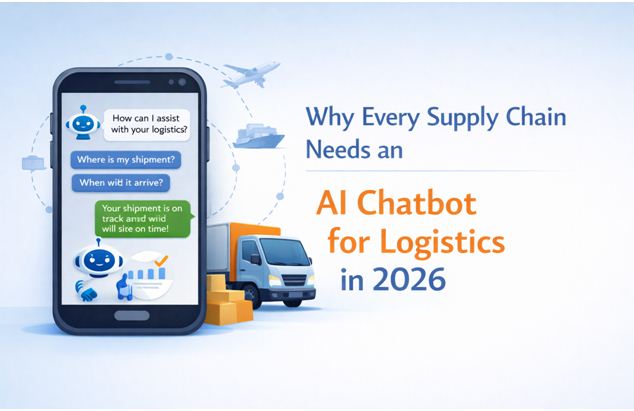
An AI chatbot for logistics handles common questions automatically. It gives quick replies, reduces the number of support tickets, and helps users get answers without waiting. This makes it easier for customers and teams to access basic information without delays or repeated follow-ups.
This is not just a support improvement. It directly affects operational speed. Faster answers lead to faster decisions, and faster decisions improve overall execution.
From Responses to Execution: What Has Changed
The biggest shift is not automation. It is a capability. Earlier systems were limited to answering questions. Now, they can take action.
An AI chatbot for supply chain connects with core systems and performs tasks directly within conversations. This removes the need for manual coordination between tools.
Instead of sending users to another system, it can:
- Update delivery instructions
- Reschedule shipments
- Trigger workflows
- Create or manage requests
This changes how logistics workflows operate. Conversations are no longer just for communication. They become execution points where actions are completed in real time. This reduces delays, improves accuracy, and keeps workflows moving without interruption.
Where AI Chatbots Deliver Immediate Impact
The impact of AI chatbots is visible across key logistics functions.
Shipment Tracking and Visibility
An AI chatbot for shipment tracking provides real-time updates without requiring users to access dashboards. Customers and teams can check status, get ETAs, and receive updates instantly.
This improves transparency and reduces dependency on manual tracking processes.
Customer Support at Scale
A customer support chatbot for logistics handles large volumes of repetitive queries across channels. It ensures:
- Instant responses
- 24/7 availability
- Consistent communication
This reduces support load and improves response time, which directly impacts customer satisfaction.
Workflow and Process Automation
An AI agent for logistics connects different systems and enables task execution without switching platforms.
This supports:
- Faster coordination between teams
- Reduced manual effort
- Improved process efficiency
This is where logistics automation with AI becomes practical. It is not limited to support. It extends into core operations.
Exception Handling and Issue Resolution
Delays, failed deliveries, and route changes are common in logistics. Handling them quickly is critical. AI chatbots can detect issues early and respond immediately. They can notify teams, update customers, and trigger corrective actions without waiting for manual input.
This reduces resolution time and prevents small disruptions from turning into larger operational problems.
Internal Team Coordination
Logistics teams often depend on constant communication between operations, warehouse staff, and support teams.
AI chatbots simplify this by acting as a shared interface across systems. Teams can check updates, confirm actions, and coordinate tasks without switching tools or waiting for responses. This keeps workflows aligned and reduces delays caused by back-and-forth communication.
From Reactive to Proactive Operations
Traditional logistics systems respond after a query is raised.
AI changes that model.
Instead of waiting for customers or teams to ask, systems can:
- Notify delays automatically
- Share updates before requests
- Alert users about issues in advance
This reduces uncertainty and improves trust.
It also improves how operations run every day. When updates are shared early, fewer users need to ask for help. A logistics customer support chatbot can notify customers before delivery, share expected arrival times, and let them reschedule if needed. This reduces repeated questions and allows support teams to spend time on more complex issues that need attention.
This shift from reactive to proactive communication is one of the most important changes in logistics operations today.
Conclusion: From Communication Layer to Operational Backbone
Logistics performance depends on speed. Not just in movement, but in decision-making. Delays in communication slow down execution. Slow execution affects outcomes.
AI chatbots address this directly.
- They automate routine interactions, connect systems, and enable actions within conversations.
- They reduce response time, improve coordination, and support real-time operations.
This is not just another feature update. It changes how logistics systems work at a deeper level. Teams that adopt it can move faster, reduce manual work, and improve how they serve customers. It helps them stay ahead. Companies that do not adapt will continue facing slow responses, broken workflows, and delays that are no longer necessary.